

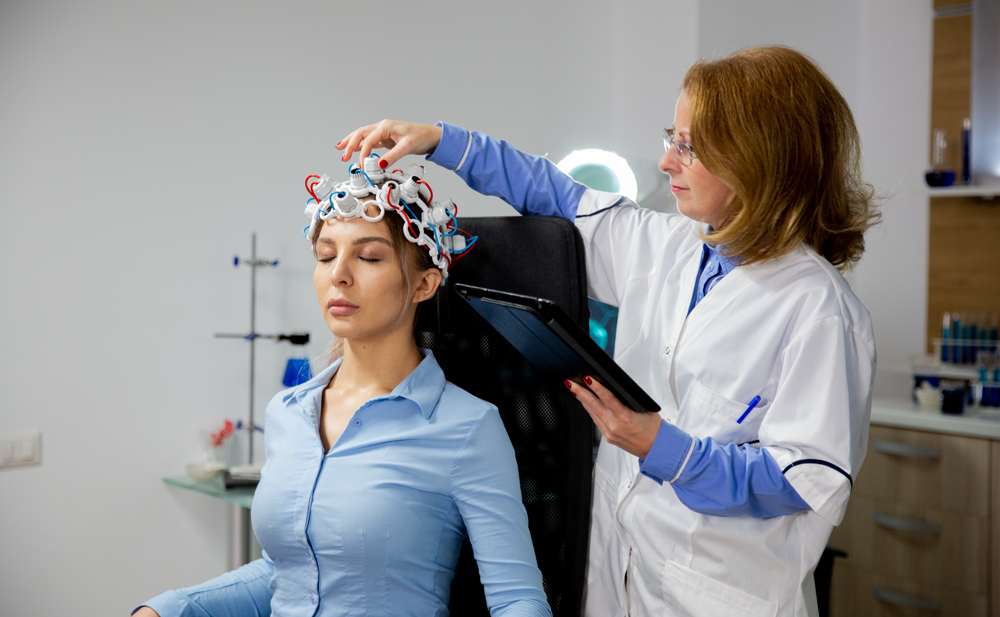
Waiting weeks for relief is not simply annoying for many dealing with depression, it can be excruciating. Even the good old-fashioned anti-depressants can take four to six weeks before you see any real effect. Therapy is vital, but it’s necessarily slow. And for those many who have tried several medications without enough relief, the question becomes less one of patience and more one of whether anything will actually help.
Accelerated TMS or transcranial magnetic stimulation depression is changing the discourse in a major way and it is worth knowing just how and why.
What is TMS and How Does it Work?
TMS therapy, or transcranial magnetic stimulation, uses targeted magnetic pulses to stimulate specific parts of the brain that are involved in mood control. The main focus is the prefrontal cortex, which is often underactive in persons with depression. The repetitive magnetic pulses delivered to this area during TMS therapy promote neuronal activation and move the brain back towards better patterns of function over the course of treatment.
The process is absolutely non-invasive and does not require anesthesia. The patient sits comfortably in a chair, a coil is held against the scalp softly and the magnetic pulses are applied over a period of time. Most people are back to normal quickly after each session, which is much different in character to therapies that require anesthesia or recovery time.
Repetitive TMS, or rTMS, is a standard treatment for depression that has strong evidence behind it and typically requires five sessions a week for four to six weeks. It has been licensed by regulatory agencies including the FDA as a recognised treatment for major depressive disorder. Accelerated TMS employs the same technique and condenses the treatment timeline dramatically.
What Sets Accelerated TMS Apart?
In a normal TMS regimen, patients undergo one session per day, over the course of several weeks. An accelerated TMS protocol involves giving several sessions in one day with intervals of around fifty minutes to allow for neuronal consolidation so that a whole course of treatment can be completed in as few as five days instead of five to six weeks.
The most studied variant of this method is the Stanford Accelerated Intelligent Neuromodulation Therapy, or SAINT protocol. In clinical trials, this procedure achieved very high rates of response in individuals with treatment-resistant depression, including patients who had failed many antidepressant drugs over many years. The results were remarkable not just in their scale, but also in their speed, with several participants reporting substantial gains within days of finishing the course.
The neurobiological rationale for the shortening of the sessions is that stimulation delivered more frequently over a short time span seems to induce stronger and more long-lasting changes in synaptic plasticity, making the brain’s mood-regulating circuits more responsive in a much shorter time window.
Who Might Be Helped by Accelerated TMS?
Accelerated TMS for depression is particularly important to treatment-resistant depression, defined as failure to satisfactorily react to two or more antidepressant medicines at an adequate dose and duration. TMS for treatment-resistant depression is one of the most clinically supported applications of the technology and the accelerated format makes it especially beneficial for people who need results in a realistic time frame rather than throughout months of trials.
It is also very significant for those who cannot endure the negative effects of antidepressant drugs such as weight gain, sexual dysfunction, emotional blunting and gastrointestinal disturbance. TMS therapy does not have these systemic effects and for many patients this is a fundamentally different and more comfortable treatment experience.
A third category who benefit greatly are those for whom the usual six-week TMS timetable is just not practicable, such as working professionals who cannot take extended leave, those with caregiving duties, or those who have travelled to receive expert TMS care. Another related approach is deep TMS depression treatment, which employs a modified coil design to target deeper brain regions and some centres provide this as part of, or alongside, an expedited protocol.
TMS vs Antidepressants: What’s the Difference?
TMS therapy and antidepressants are not competing treatments but different instruments for different scenarios and the proper one relies on the individual’s clinical history.
Antidepressants are still a first-line treatment for depression since they work for many patients, is widely available and are reasonably cheap. If someone is doing well on the medicine, then there is usually no need to change it. TMS therapy, however, is very important for those instances where medications have not been effective, where side effects have been prohibitive, or if someone is looking for a well-evidenced, non-invasive depression treatment that does not necessitate ongoing pharmaceutical maintenance.
Even more remarkable is that with the accelerated TMS procedure, clinical improvements can be seen in the first two to three days of treatment, a time frame that no existing antidepressant can equal. That is a clinically and personally important speed for someone in intense depressed suffering.
What to Expect During Treatment
In accelerated TMS protocols, each session is usually short, lasting between three and twenty minutes, depending on the protocol. The magnetic pulses can feel like tapping or clicking on the scalp, and some patients feel slight pain or a light headache during the first few sessions, although this usually decreases as therapy continues.
For the vast majority of patients, the adverse effects of TMS therapy are minimal and temporary. The most prevalent are scalp discomfort at the stimulation site and moderate headaches in the first few sessions, both of which pass on their own. TMS has a very low risk of seizure, which is why a full medical screening is always carried out before commencing treatment. Generally, those with particular metal implants in or around the head are not good candidates.
There is no anesthesia, no recovery time and most individuals drive themselves to and from visits while continuing their normal daily routine during the whole course of treatment.
TMS Therapy Results: What the Evidence Says
There remains to be good clinical evidence supporting TMS therapy for depression. In many large scale trials, response rates for conventional rTMS in treatment resistant populations range from about 50 to 60 percent with remission rates around 30 to 35 percent. These are meaningful clinical numbers for a population that has not responded to traditional treatment.
Early trials with the accelerated SAINT regimen have indicated response rates more than 70 percent and remission rates greater than 50 percent in treatment resistant groups in particular. Larger replication studies are in progress, and the field is currently optimizing the ideal dose parameters. “What we have seen so far is a bona fide and well-documented advance in our treatment of severe depression.”
Maintenance treatment (occasional booster sessions, or combined with psychotherapy) is often recommended to sustain TMS therapy results over the long-term.
Is Fast TMS available in US?
TMS therapy is already offered in specialty mental health centres in US and clinical awareness is expanding steadily. In the past, only people living in large cities had access, but the profession is growing as more practitioners get trained and more patients look for alternatives to just taking medication. If you’re based in any city in US and are considering TMS therapy, it’s important speaking with a centre with specialized experience with accelerated protocols. The clinical needs and session logistics differ considerably from normal rTMS delivery.
Our NABHS team comprises professionals experienced in the assessment and delivery of TMS therapy. We thoroughly assess each patient before prescribing an accelerated or standard protocol to ensure the approach is clinically suitable and really customized.
Next Steps
If you or someone you love has been struggling with depression that has not responded to previous therapies, rapid TMS is worth serious investigation. It’s not a last resort, it’s a clinically recognized, non-invasive therapy option with a growing body of data behind it and a treatment timeframe that fits into real life.
Reach out to us at nabhs.org to schedule a consultation, and we will take the time to get to know your history and help you determine if TMS therapy is the move forward.